

Catnip, Silvervine, and the quality gap the industry isn't talking about

By Matt Anderson, co-founder, The Catnip Queen
WHEN you walk into most pet retailers you'll find catnip products shelved together
with no distinction between them.
Standard grade, therapeutic grade, catnip-only, catnip-silvervine blends - all presented as broadly equivalent but they're not.
Understanding why matters both for the professionals recommending these products, us as consumers and for the cats they're intended to help.
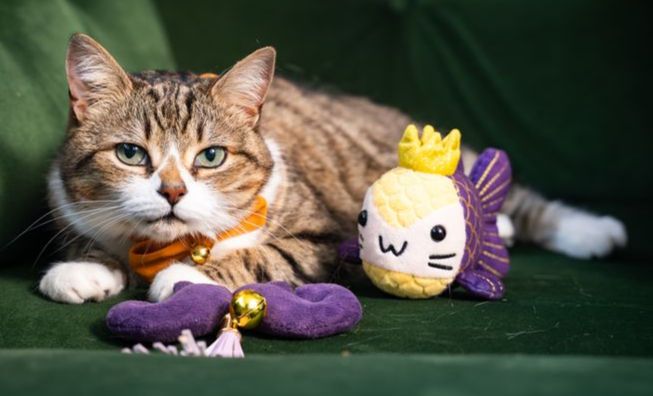
Catnip - Nepeta cataria - produces nepetalactone, a bicyclic monoterpenoid that
binds to feline olfactory receptors and triggers a neurological response mimicking
pheromone stimulation.
The behavioural result is familiar: rolling, rubbing, wonderful purring noises, a period of euphoric activity followed by a refractory phase of roughly 30 minutes. The response is inherited, autosomal dominant, and entirely safe. It's also, surprisingly absent in approximately 30% of cats.
That 30% matters. A cat owner who buys a catnip product, watches their cat ignore it
completely, and concludes that enrichment toys don't work, has been failed by incomplete information. The product may be perfectly good. It simply wasn't formulated for their cat.
The Refractory Period and What It Tells Us
The 30-minute reset window is worth dwelling on briefly, because it's frequently misunderstood at the point of sale. Owners who re-expose their cat to catnip mid-
session - offering more in an attempt to extend the response - are wasting product and occasionally generating the mistaken conclusion that the cat has "gone off" catnip entirely.
But what we need to remember at this point is that the receptors are temporarily saturated, so the response will return. A recent analysis by Paws Chicago Cats, revealed that cats have more than 200 million odour sensors in their noses; and us humans have just five million! A cat's sense of smell is 14 times better than that of humans.

It's also worth clarifying a point that comes up regularly in consumer-facing conversation: nepetalactone is non-addictive. There is no withdrawal, no tolerance build-up, no adverse health profile in normal enrichment use.
Cats that ingest rather than sniff catnip typically experience mild sedation rather than stimulation - a distinction that occasionally surprises their cat parents, but is entirely benign.
The response intensity also varies across an individual cat's lifetime. Stress, reproductive status, and significant environmental change all affect sensitivity.
A cat navigating a house move or a difficult multi-cat introduction may show a reduced or absent response for a period. This is not product failure. It's a stress indicator, and a useful one.
For us at The Catnip Queen, Silvervine (Actinidia polygama) is where the picture becomes much more interesting. Native to mountainous regions of China and Japan,
it contains two active compounds - actinidine and dihydronepetalactone - that stimulate feline receptors differently to nepetalactone.
Crucially, it activates a distinct receptor pathway. Cats that show no response to catnip will frequently respond to silvervine.
Research published in iScience in 2021 found silvervine to be effective in over 80% of cats tested, including many that were non-responsive to catnip.
A separate study from Iwate University the same year produced an additional finding that hasn't received sufficient attention: the face-rubbing and rolling behaviour triggered by both catnip and silvervine appears to transfer the active compounds onto the cat's fur.
Nepetalactone and isoiridomyrmecin - released during the response - function as effective mosquito repellents. The behaviour that looks purely recreational may, in
evolutionary terms, be self-protective.
The implication for anyone advising cat owners is straightforward: a dual-compound approach - catnip and silvervine together - covers significantly more of the feline population than catnip alone. It's not a marketing proposition, it's pharmacology applied to enrichment.
Why Heritability Matters in Practice
The autosomal dominant inheritance of catnip sensitivity has a practical implication that doesn't get discussed enough at retail level. Around two thirds of the domestic cat population carries the gene. The remaining third do not, and no concentration of nepetalactone changes that. This is heritable and fixed.
For professionals working with rescue populations - where cats arrive with unknown histories and uncertain genetics - this has direct relevance.

Recommending catnip-only products as a universal enrichment solution for cats in shelter or foster environments will predictably fail a third of those animals.
A dual-compound formulation isn't a premium option in that context. It's the appropriate starting point.
As part of our research prior to launch, we regularly met with cat parents, cattery owners and cat rescue coordinators who'd written off catnip as ineffective after trying
standard products on cats that simply don't carry the gene.
It's vital to remember that the fix isn't a better catnip, it's simply a different compound. Silvervine reaches animals that catnip never will. That's not a subtle distinction when you're trying to provide enrichment for a stressed rescue cat in the first weeks of a new placement.
Potency and sourcing are the variables that determine whether any of this translates into actual behavioural benefit.
Nepetalactone concentration degrades. Catnip sitting in a warehouse for six months, or in a retail environment under consistent light exposure, loses efficacy. The tell is straightforward: open up the product and genuinely potent catnip has an immediate, distinctive scent.
Flat-smelling catnip has degraded or was never concentrated enough to matter. This is the quality gap that separates therapeutic-grade product from catnip-scented novelty.
At The Catnip Queen, we source organic catnip and have a direct relationship with the grower. The proximity isn't an aesthetic choice - it's quality control. We know what we're working with in each batch.
For anxious cats, particularly rescues transitioning into new homes, the therapeutic response to high-quality catnip and silvervine isn't recreational - it's genuinely behavioural.
The compounds interact with endorphin pathways in ways that reduce stress markers. Used consistently as part of an enrichment protocol, they support the kind of environmental stability that rescue cats, specifically, need most.
For me personally, the product category deserves to be taken more seriously than it currently is. Catnip isn't a gimmick or a novelty. And Silvervine isn't an upsell.
Together, formulated properly, sourced honestly, they're among the most effective and accessible enrichment tools available to cat owners - with the science to support that.
The industry needs to do better in communicating the distinction between grades, between compounds, between products that work and products that merely exist on a shelf.
That conversation needs to start with the professionals who stock and recommend these products. If you're fielding questions about catnip from clients or customers and want to discuss formulation, sourcing, or the research, I'm happy to talk!
The Catnip Queen is a UK-based organic therapeutic catnip and silvervine brand. For more information, visit thecatnipqueen.com


Comments