

The Way of the Dragon: A beginner's guide to keeping bearded dragons as pets

By Dr Sonya Miles BVSc CertAVP(ZM), CertAqV, MRCVS
RCVS Recognised Advanced Practitioner in Zoological Medicine
BEARDED dragons are among the most popular pet reptiles in the UK, and for good reason. Their inquisitive nature, manageable size, and generally tolerant temperament make them appealing to both first-time reptile keepers and experienced enthusiasts. However, despite their reputation as "easy" pets, bearded dragons have very specific environmental, nutritional, and behavioural requirements.
When these needs are not met consistently, chronic health problems can develop.

The central bearded dragon (Pogona vitticeps) originates from Australia, where it inhabits semi-arid and arid regions including woodland, grassland, rocky outcrops and sandy desert terrain. In these environments they spend much of the day basking in direct sunlight, retreating to burrows or shaded areas during periods of extreme heat. Understanding this natural history is essential, as successful captive care depends upon recreating these environmental conditions as closely as possible.
Understanding Bearded Dragon Biology and Behaviour
Bearded dragons are diurnal reptiles, meaning they are active during the day. In the wild, juveniles are often more arboreal, spending time climbing trees and shrubs, whereas adults become increasingly terrestrial. They are accomplished climbers and thermoregulators, frequently moving between microhabitats to control their body temperature.
As ectotherms, they rely entirely on external heat sources to regulate physiological processes including digestion, immune function, and activity levels. Without appropriate heat and ultraviolet (UV) exposure, normal metabolism cannot occur.
One of the species’ most recognisable features is the expandable "beard", which can darken dramatically in response to stress, defence, or social interaction.
Body colour may also change according to temperature and emotional state; lighter shades are often seen when body temperature is elevated, while darker colours may assist with heat absorption. Stress may be reflected in distinct striping patterns on the ventral surface.

Although often described as sociable, bearded dragons are naturally solitary animals. In the wild, interactions are largely limited to territorial disputes and breeding. Mature males in particular can be highly territorial.
For this reason, cohabitation is rarely recommended, especially for beginners, as chronic stress and physical injury can occur even when overt aggression is not immediately obvious.
Housing: Creating a Suitable Environment
Providing appropriate housing is one of the most critical aspects of bearded dragon care. Juveniles are frequently sold in small enclosures, but these are rarely suitable long term. An adult bearded dragon requires a vivarium measuring at least 4 ft x 2 ft x 2 ft, with larger enclosures preferable whenever possible.
Wooden vivaria with glass fronts are often superior to full glass enclosures, as they retain heat more effectively while still allowing visibility. Adequate ventilation must be provided, but humidity should remain relatively low, ideally below 40%, reflecting the species’ arid origins.
Floor space is particularly important, as bearded dragons are active and benefit from opportunities to explore and move between temperature zones. Multiple levels, climbing branches, cork bark, and sturdy platforms should be incorporated to encourage natural behaviours. Elevated basking sites positioned beneath heat and UV sources are especially important.
Substrate choice requires careful consideration. Loose particulate substrates such as bark, woodchips, calci-sand, or compacted pellets are associated with an increased risk of gastrointestinal impaction, particularly in young animals or in enclosures where temperatures are suboptimal.
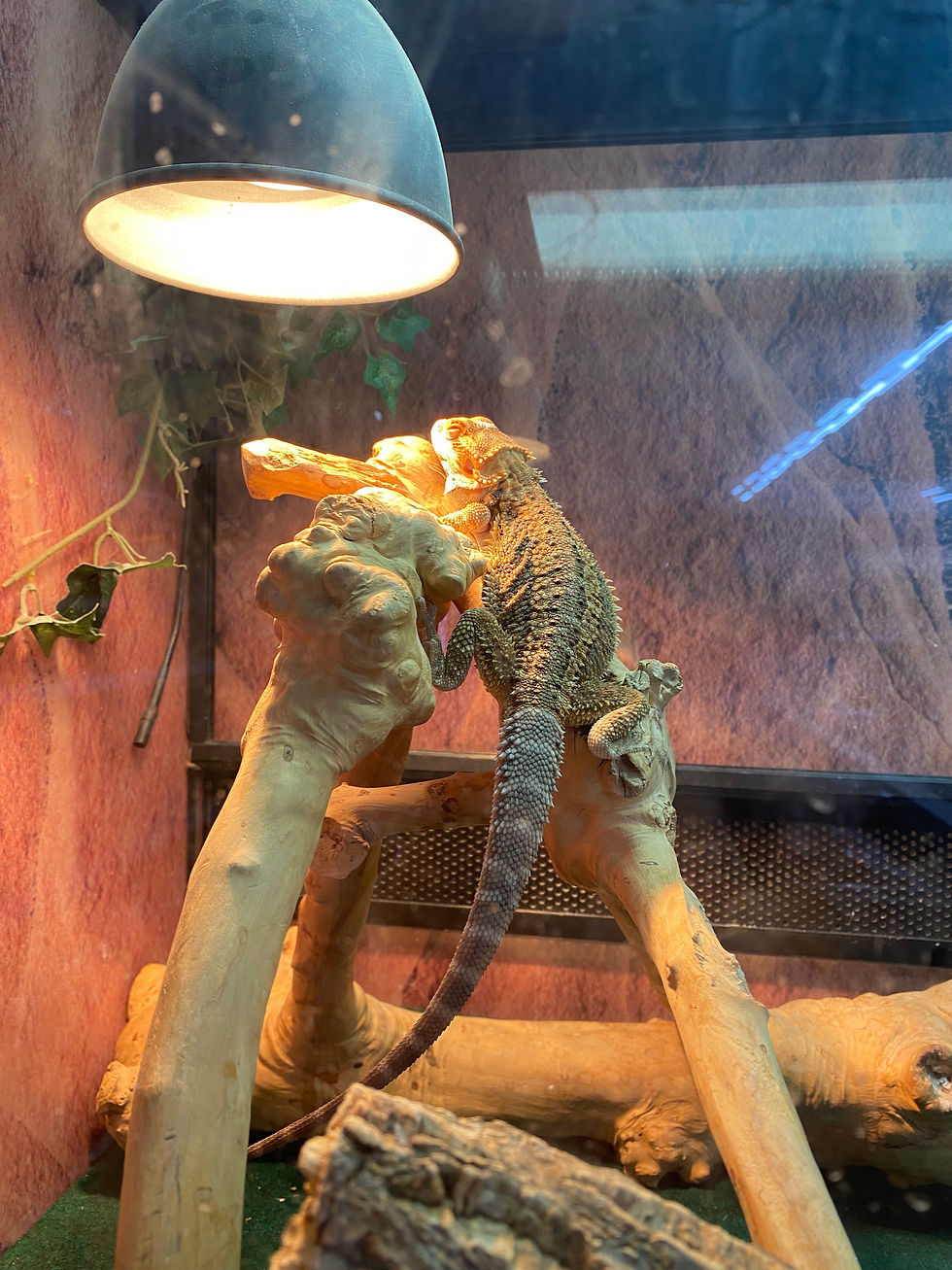
Solid substrates such as textured tiles, slate, or reptile carpet are often safer options. However, digging is a natural behaviour, especially for females during egg-laying, so provision of a designated digging area containing an appropriate sand–soil mixture can support behavioural welfare.
Lighting and Heating: Replicating the Australian Sun
Correct lighting and heating underpin virtually every aspect of bearded dragon health. Radiant heat sources are essential, and heat must be provided from above to mimic natural basking. Heat mats and heat rocks are not appropriate for this species and may predispose to burns or inadequate thermoregulation.
A basking spotlight controlled by a dimming thermostat allows for stable temperature management.
The basking zone should reach approximately 35–42°C, while the cooler end of the enclosure should remain between 24–26°C. This gradient allows the dragon to self-regulate its body temperature effectively. Night-time temperatures should not fall below 20°C, and ceramic heat emitters may be used where additional overnight warmth is required.
Equally vital is ultraviolet B (UVB) lighting. UVB radiation enables the synthesis of vitamin D₃ within the skin, which in turn allows proper calcium absorption. Without adequate UVB exposure, metabolic bone disease can develop, leading to skeletal deformities, weakness, and fractures.

High-output UVB tube lighting, ideally spanning much of the enclosure length and fitted with a reflector, is recommended. Bulbs must be replaced regularly according to manufacturer guidelines, even if they continue to emit visible light, as UV output declines over time.
Digital thermometers should be used to monitor temperatures at both ends of the enclosure, ensuring consistent environmental control.
Feeding and Nutrition
Bearded dragons are omnivorous, and their dietary requirements change with age. Hatchlings and juveniles require higher levels of protein to support growth and therefore consume a greater proportion of live insects.
In contrast, adults should receive a diet predominantly composed of plant matter, with insects forming a smaller percentage.
Suitable live prey includes crickets, locusts, Dubia roaches, mealworms, morio worms, waxworms, calci worms and earthworms. All live food should be appropriately sized and gut-loaded to enhance nutritional value. Worm species tend to be higher in fat and should therefore be offered sparingly.
Uneaten live insects should be removed promptly to prevent stress or injury.
Plant material should focus on a wide variety of leafy greens, such as kale, rocket, collard greens, mustard leaves, chicory, watercress, lambs lettuce and dandelion leaves. Mixed leaf salads are acceptable, but iceberg lettuce should be avoided due to poor nutritional content. Fruit may be offered occasionally for variety but should not form a significant proportion of the diet.

Calcium and multivitamin supplementation are essential, particularly for growing animals and egg-laying females. A suitable calcium powder and balanced multivitamin supplement should be used according to manufacturer and veterinary guidance. Lightly misting food can assist supplement powders in adhering to plant matter and insects.
Fresh water should always be available in a shallow dish positioned at the cooler end of the enclosure.
Some individuals readily drink from bowls, while others may lap droplets placed on their snout.
Bathing may encourage hydration in some animals but can be stressful for others and should not be forced.
Recognising Signs of Illness
Bearded dragons are adept at masking early signs of disease. Subtle changes in behaviour or posture are often the first indicators that something is wrong.
Lethargy, reduced appetite, limb swelling, abnormal curvature of the legs, open-mouthed breathing, nasal discharge, loose stools, spontaneous fractures, or the development of masses should all prompt veterinary attention.
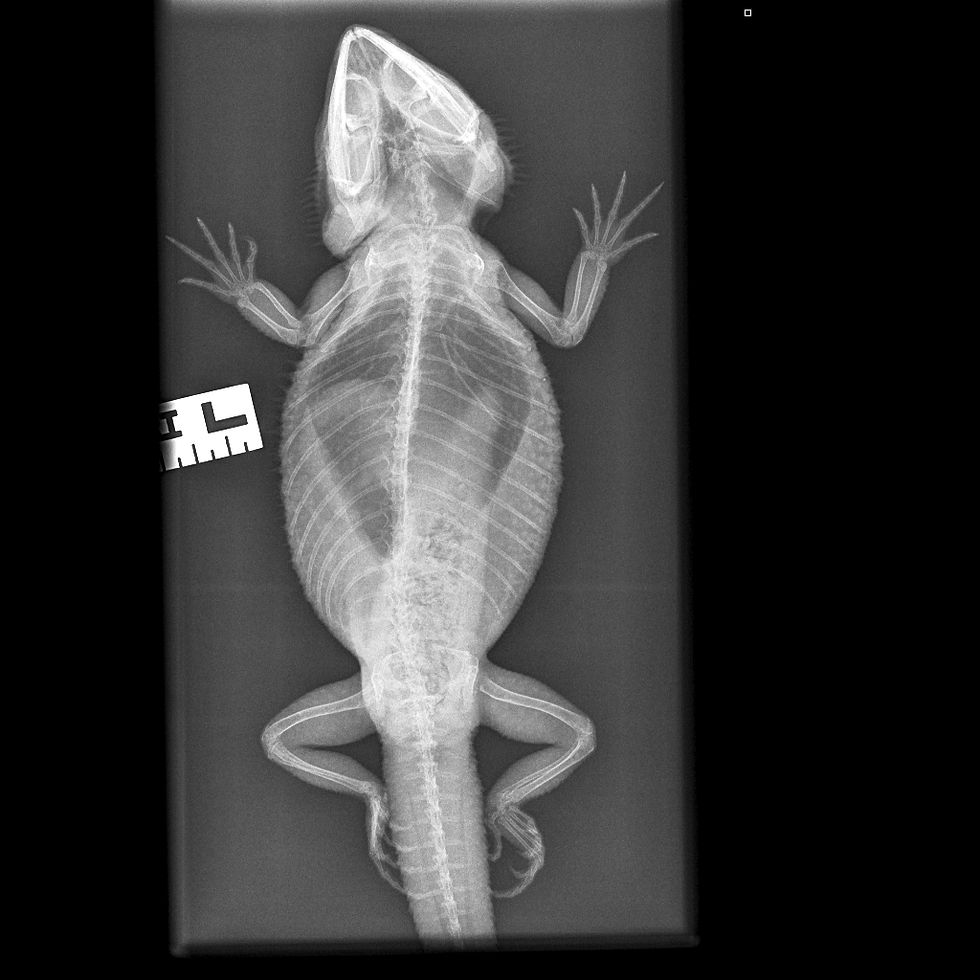
Many of the common health issues seen in captive bearded dragons, including metabolic bone disease, impaction, and respiratory infections, are closely linked to husbandry errors.
Early intervention and correction of environmental factors are critical to successful treatment.
A Long-Term Commitment
With appropriate care, bearded dragons commonly live 10–15 years, and some individuals exceed this. They are not short-term or low-maintenance pets. Responsible ownership requires consistent environmental management, ongoing dietary planning, and regular veterinary oversight.
When their biological and behavioural needs are understood and met, bearded dragons can thrive in captivity. Their alert expressions, interactive behaviours, and distinctive personalities make them engaging companions. As with all exotic species, success begins with education, continues with careful husbandry, and ultimately ensures a long and healthy life for the animal in our care.
Dr Miles is also a WAVMA Certified Aquatic Species Veterinarian
Exotic Species Veterinary Surgeon
Director of Just Exotics
BVZS Junior Vice President (2025-2026)



Comments